Aug 6, 2026Material & Performance Deep Dives
How Fiber Optic Spools Enable 60KM Long Range UAV Missions
Learn how UAV fiber optic spools support 60KM long-range drone missions with stable communication, anti-interference performance, and reliable data transmission.
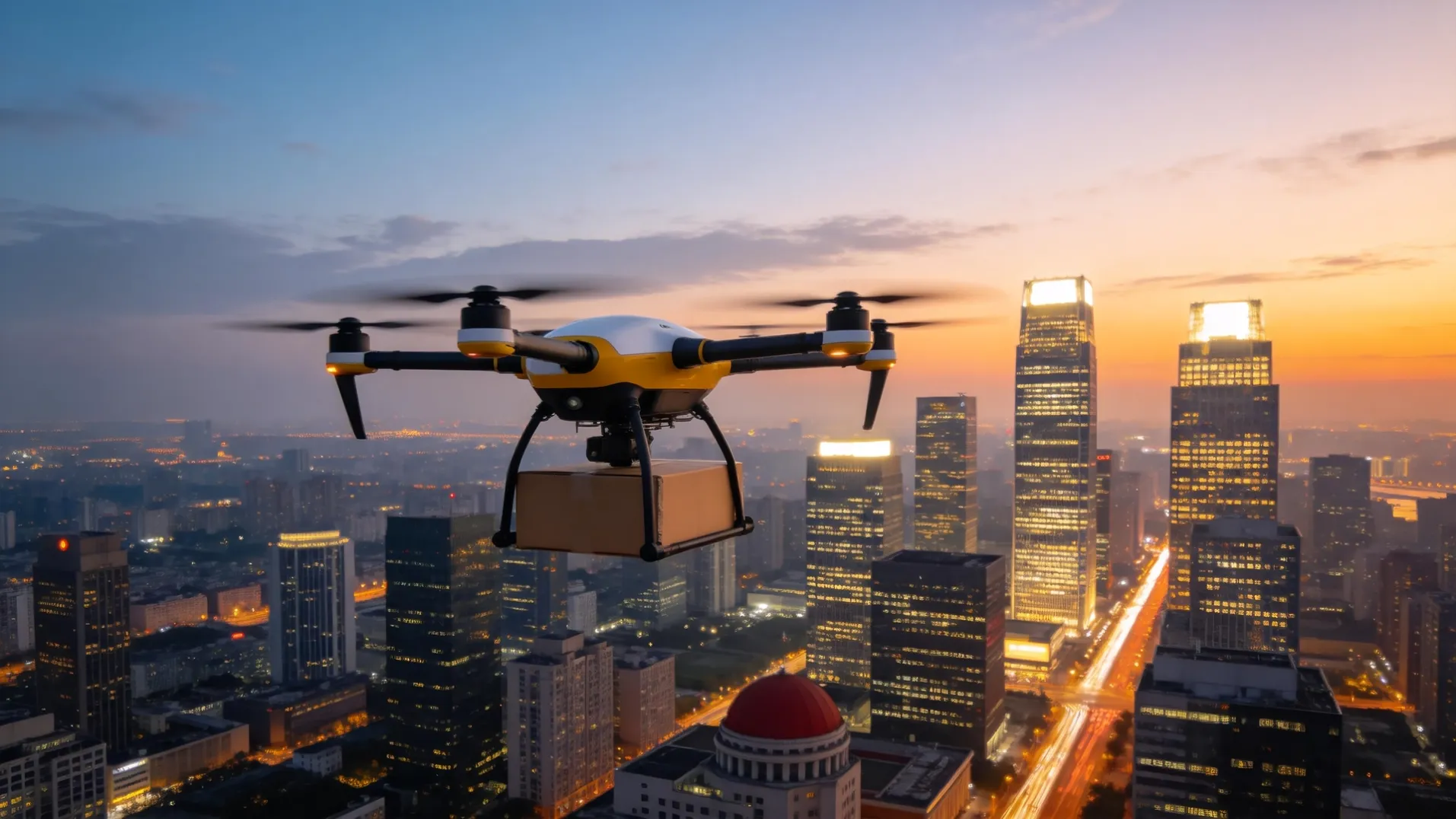
The drone industry is moving into a new stage.
A few years ago, drones were mainly used for photography, entertainment, and simple inspections. Today, UAVs are performing much more demanding tasks, including border surveillance, emergency rescue, industrial inspection, and large-scale mapping.
But there is one problem that every professional drone operator needs to consider:
How can a drone maintain stable communication when it flies several kilometers away from the operator?
For short-distance flights, traditional radio communication works well. However, when missions require longer range, continuous video transmission, and reliable control, communication becomes one of the biggest challenges.
This is where UAV fiber optic spool technology becomes important.
By using a lightweight fiber optic cable stored inside a spool, drones can maintain a stable connection over long distances, including missions reaching 60KM and beyond.
Why Long-Range UAV Communication Is Becoming More Important
Modern UAV applications are expanding quickly.
Organizations are using drones for:
- Security patrols
- Disaster monitoring
- Infrastructure inspection
- Military and defense applications
- Environmental surveys
- Precision mapping
In these scenarios, drones are not just flying cameras anymore.
They are carrying advanced equipment such as:
- High-resolution cameras
- Thermal imaging sensors
- LiDAR systems
- AI processing modules
- Communication equipment
The amount of data generated during these missions is huge.
A small communication failure may result in:
- Lost video transmission
- Delayed decision-making
- Incomplete inspection data
- Mission interruption
The thing is, for normal drone flights, a short signal interruption might not be a big issue. But for critical operations, even a few seconds can create serious problems.
What Is a UAV Fiber Optic Spool?
A UAV fiber optic spool is a specialized communication system designed for drones.
Instead of relying completely on wireless signals, the drone maintains a physical connection with the ground station through a fiber optic cable.
The system usually includes:
- UAV platform
- Fiber optic spool
- Optical transmission module
- Ground control station
- Fiber optic cable
During flight, the cable is released from the spool while the drone moves away from the operator.
The fiber cable provides a direct communication path for:
- Flight control signals
- Real-time video transmission
- Sensor data
- Mission information
Unlike traditional wireless communication, optical transmission is highly resistant to electromagnetic interference.
How Fiber Optic Spools Support 60KM UAV Operations
Long-range UAV missions require more than just a powerful drone.
The communication system must also handle:
- Distance
- Environmental interference
- Data transmission requirements
- Mission reliability
A high-performance fiber optic spool helps solve these challenges.
1. Stable Communication Over Extended Distances
One of the biggest advantages of fiber optic drone systems is communication stability.
Wireless signals can weaken because of:
- Distance
- Obstacles
- Weather conditions
- Electromagnetic interference
Fiber optic cables transmit data through light signals, allowing reliable communication over long distances.
For professional UAV applications, TECHMAX fiber optic spools are designed to support missions from:
1KM to 60KM
This makes them suitable for:
- Long-range patrol
- Remote monitoring
- Large-area surveillance
- Industrial inspection
2. Reducing Signal Interference in Complex Environments
Many UAV missions happen in challenging environments.
Examples include:
- Urban areas with many wireless devices
- Industrial facilities
- Emergency response locations
- Areas with electromagnetic interference
Traditional radio-controlled drones may experience unstable communication in these situations.
Fiber optic communication provides a major advantage because it is not affected by most electromagnetic interference sources.
You might be surprised how many communication problems in drone operations are actually caused by interference rather than the drone itself.
A stable connection often determines whether a mission succeeds or fails.
3. Supporting Real-Time Video and Data Transmission
Modern UAV missions depend heavily on real-time information.
For example:
A rescue team may need live aerial images before entering a dangerous area.
A construction company may need accurate mapping data during an inspection.
A security team may require continuous surveillance footage.
A fiber optic spool allows high-quality data transmission between the drone and control station.
Benefits include:
- Stable HD video transmission
- Low communication delay
- Reliable sensor data transfer
- Improved operational awareness
4. Improving Security for Professional UAV Missions
Wireless drone systems communicate through radio signals.
While modern encryption technology improves security, wireless communication can still face challenges such as:
- Signal jamming
- Unauthorized interference
- Communication disruption
For sensitive operations, maintaining a secure connection is essential.
Fiber optic drone systems provide a physical communication channel, making them suitable for missions where reliability and security are important.
Applications of 60KM Long Range UAV Fiber Optic Systems
Border and Security Surveillance
Long-distance UAV patrols require continuous communication.
Fiber optic spool systems help operators monitor large areas while maintaining stable control and video transmission.
Applications include:
- Border monitoring
- Critical infrastructure protection
- Security patrol
Emergency Rescue Missions
During disasters, communication networks may become damaged or overloaded.
Drones equipped with fiber optic communication systems can provide:
- Real-time aerial views
- Stable connections
- Fast situation assessment
They can support operations such as:
- Flood rescue
- Earthquake response
- Fire monitoring
Aerial Mapping and Surveying
Surveying drones collect large amounts of information.
Accurate mapping requires:
- Stable connection
- Continuous data transmission
- Reliable operation
Fiber optic spools help maintain communication during long-range mapping missions.
Industrial Inspection
Industries such as:
- Energy
- Mining
- Transportation
- Manufacturing
use UAVs to inspect difficult locations.
Long-range fiber optic communication allows operators to collect information without putting workers into dangerous environments.
Fiber Optic Spool vs Traditional Wireless Drone Communication
Feature | Fiber Optic Spool Drone | Wireless Drone |
|---|---|---|
Communication Method | Fiber cable transmission | Radio frequency |
Range Capability | Suitable for long-distance missions | Limited by signal conditions |
Interference Resistance | Very high | Can be affected |
Data Stability | Excellent | Depends on environment |
Security | High reliability | Requires additional protection |
Mobility | Cable connected | Fully wireless |
Why Lightweight Design Matters for UAV Fiber Optic Spools
A common concern about tethered drone systems is weight.
A heavy cable can reduce:
- Flight time
- Payload capacity
- Drone performance
Therefore, modern UAV fiber optic spools need to balance:
- Cable strength
- Weight
- Transmission distance
- Reliability
TECHMAX develops lightweight, high-strength fiber optic spool solutions designed for:
- FPV drones
- Special mission UAVs
- Long-range patrol platforms
The goal is simple: maintain communication performance without unnecessarily increasing the drone's load.
TECHMAX: Professional UAV Fiber Optic Spool Manufacturer
TECHMAX GLOBAL SDN. BHD. is a Malaysia-based company specializing in UAV fiber optic spool solutions.
Our products are designed for professional drone applications requiring reliable long-distance communication.
Key advantages include:
Ultra-Stable Long Range Performance
Supporting UAV missions from 1KM to 60KM with reliable signal transmission.
Anti-Interference Communication
Designed for rescue missions and complex environments where wireless communication may become unstable.
High-Precision Data Transmission
Suitable for aerial mapping, inspection, and professional surveying applications.
Lightweight and High-Strength Design
Providing plug-and-play compatibility for FPV drones and special mission platforms.
As UAV applications continue expanding, reliable communication systems will become a core part of future drone technology.
The future of UAV technology is not only about faster motors, better cameras, or longer battery life.
Communication reliability is equally important.
For short-range flights, traditional radio-controlled drones remain a practical choice.
However, for professional missions requiring:
- 60KM long-range operation
- Stable communication
- Anti-interference capability
- Continuous data transmission
fiber optic spool technology provides a powerful solution.
With the increasing demand for industrial and mission-critical UAV applications, long-range fiber optic communication will continue to play an important role in the next generation of drone systems.
Reliable Information Sources
1. Federal Aviation Administration (FAA) – Unmanned Aircraft Systems (UAS)
The FAA provides official guidance on UAV operations, safety requirements, and drone industry development.
2. International Civil Aviation Organization (ICAO) – Unmanned Aircraft Systems
ICAO provides international standards and recommendations related to unmanned aircraft operations.
3. MDPI Drones Journal – UAV Technology Research
A peer-reviewed academic journal covering UAV communication, drone systems, and emerging aerial technologies.
4. National Institute of Standards and Technology (NIST) – Public Safety Robotics
https://www.nist.gov/el/intelligent-systems-division-73500/public-safety-robotics
NIST researches robotics and unmanned systems for emergency response and public safety applications.