
Sep 15, 2026
Industrial UAV Fiber Optic Reel Buyer Checklist: Distance, Payload, FC Connector and G657A2 Fiber
Buyer checklist for industrial UAV fiber optic reel projects: distance selection, payload, FC connector matching, G657A2/B6.a2 thin fiber, sky transmitter and ground receiver checks.
Introduction
Industrial UAV teams often compare fiber optic reel systems by distance first: 10km, 20km, 30km, 40km, 50km or 60km.
Distance matters, but it should not be the only selection point.
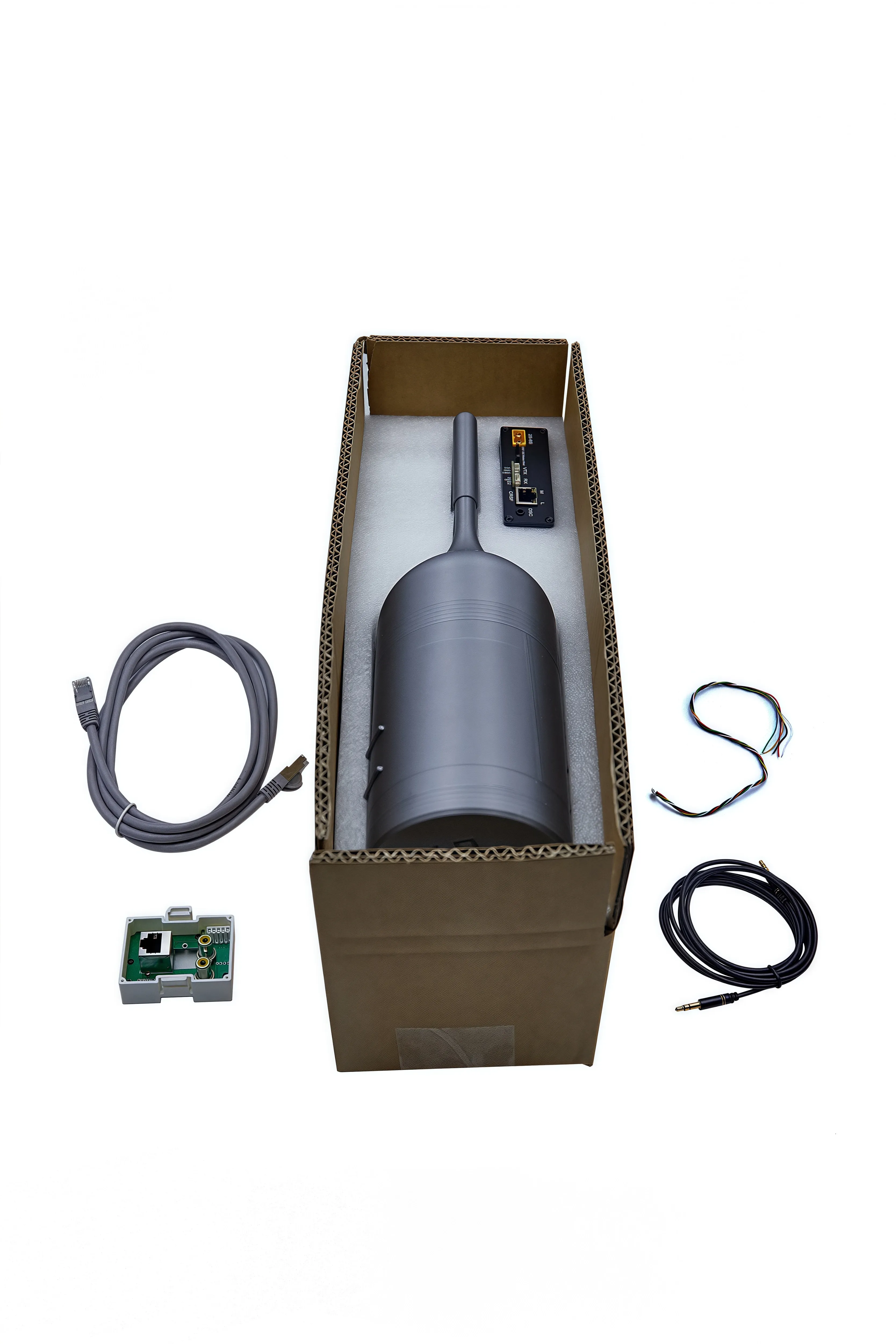
For a practical field test, buyers should check the full optical communication link: the UAV fiber optic reel, thin fiber, FC connector, sky transmitter, ground receiver, video/data wiring, payload margin and flight route.
This checklist is written for UAV integrators, FPV engineering teams, drone inspection users and commercial drone operators who need a more stable communication path in interference-sensitive environments.
1. Confirm the Test Purpose Before Choosing Distance
The longest reel is not always the best first sample.
Project Stage | Practical Distance Direction | Main Purpose |
|---|---|---|
Early sample evaluation | 10km / 20km | Learn installation, payout behavior and module connection. |
Field proof-of-concept | 30km / 40km | Test longer optical link performance and real flight workflow. |
Advanced project validation | 50km / 60km | Validate long-distance communication after payload and layout are confirmed. |
If the drone platform, payload margin and fiber outlet route have not been confirmed, starting with the maximum distance can create unnecessary test risk.
2. Check Drone Payload Before Ordering
A UAV fiber optic reel is not only an optical component. It becomes part of the drone payload.
Before ordering, confirm:
- Drone model
- Available payload allowance
- Mounting position
- Center of gravity effect
- Flight time after payload installation
- Landing clearance
- Whether accessories or modules add extra weight
For B2B buyers, payload information helps the supplier recommend a practical configuration instead of only quoting by distance.
3. Check Fiber Outlet Direction and Propeller Clearance
Fiber payout is one of the most important field-test details.
Before takeoff, the operator should check:
- The fiber outlet is away from propellers.
- The payout path is not blocked by the drone frame.
- There are no sharp bending points near the outlet.
- Two to three meters of fiber are pulled out before takeoff.
- The initial payout is smooth.
Many avoidable field-test issues come from installation layout, not from the fiber specification itself.
4. Confirm FC Connector Matching
For UAV fiber optic reel projects, connector matching should be confirmed before powering the system.
Check:
- Reel fiber interface
- Sky transmitter fiber interface
- Ground receiver fiber interface
- FC connector condition
- Cleanliness and protection during handling
- Whether the connector type matches the buyer's existing module plan
If the optical interface is not confirmed early, the sample can arrive but still not be ready for a proper field test.
5. Match the Sky Transmitter and Ground Receiver
The reel, sky transmitter and ground receiver should be treated as one communication system.
Module | Buyer Checkpoints |
|---|---|
Sky transmitter | Working voltage, FC interface, P/F/V/D indicators, video/data wiring, installation space. |
Ground receiver | Power input, FC interface, video output, CRSF/PPM switch if required, field connection method. |
For TECHMAX projects, the sky transmitter and ground receiver options can be discussed together with distance and fiber configuration.
6. Understand G657A2 / B6.a2 Thin Fiber
G657A2 / B6.a2 bending-insensitive single-mode thin fiber is often discussed in UAV fiber optic spool projects because the fiber must work in a compact payout environment.
Buyer questions to confirm:
- Is the fiber single-mode?
- Is it suitable for compact reel payout?
- What is the fiber diameter requirement?
- What is the expected handling temperature?
- How should the operator avoid sharp bending during installation and flight?
The fiber specification should be considered together with reel design and field operation, not as a separate line item.
7. Plan the First Field Test Carefully
Before the first field test:
- Confirm the drone payload.
- Confirm the reel and module mounting.
- Pull out 2-3 meters of fiber.
- Keep fiber away from propellers.
- Check sky transmitter indicators.
- Check ground receiver output.
- Avoid rapid descent and tight turning during descent.
- Record distance, payload, flight route and signal condition.
This makes the test result more useful for future procurement decisions.
8. What to Send Before Requesting a Quote
To receive a practical configuration recommendation, buyers should send:
Information Needed | Example |
|---|---|
Target distance | 10km, 30km, 60km |
Drone type | FPV drone, industrial UAV, custom platform |
Payload limit | Available payload in grams or kilograms |
Video/data requirement | Analog video, data signal, project-specific wiring |
Test environment | Open field, inspection route, mapping area |
Connector/module needs | FC interface, sky/ground module requirement |
Purchase purpose | Sample test, integration project, batch procurement |
Conclusion
A UAV fiber optic reel should be selected as a complete optical communication system, not only as a spool with a distance label.
For industrial UAV and FPV projects, buyers should check distance, payload, fiber outlet route, FC connector, sky transmitter, ground receiver and field-test behavior before finalizing the configuration.
TECHMAX supplies UAV fiber optic reel and FPV fiber optic spool systems with G657A2 / B6.a2 thin fiber, FC interface, sky transmitter and ground receiver options for drone optical communication projects.
Product reference:
https://www.techmax-global.com/products/uav-fiber-optic-reel-g657a2-0-23mmRequest a configuration quote:
https://www.techmax-global.com/contact-usSuggested FAQ Schema